

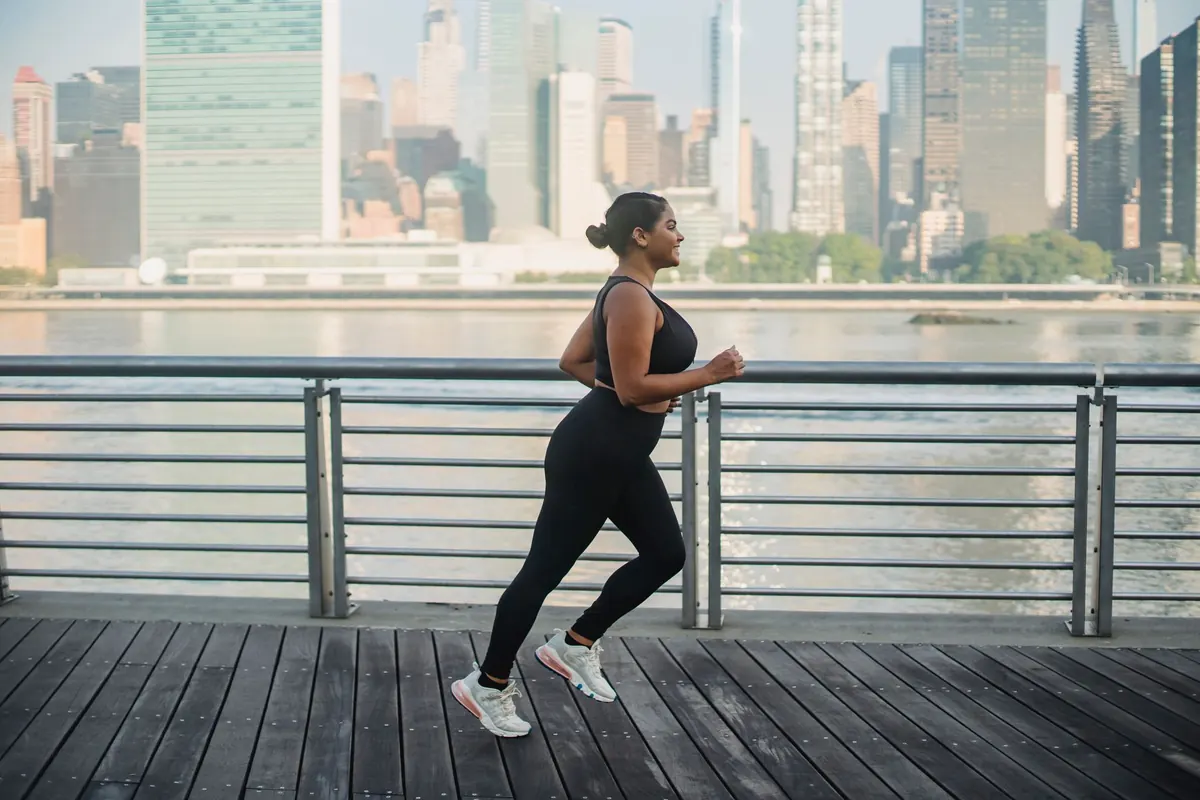
Stand on the towpath at Putney on a Saturday morning and you see the whole range: a woman in her fifties jogging steadily towards Hammersmith, a teenager walking with a coffee, two friends running side by side and talking in full sentences. That last detail is the one worth remembering. The Thames Path is flat, forgiving and full of people who are not racing anyone. It is one of the best places in Britain to run your first 5K, provided you pick the right stretch, keep the pace honest and give yourself eight weeks.
Why the Thames Path Suits a First 5K
The Thames Path National Trail runs roughly 184 miles from the river's source in Gloucestershire to the estuary, and the stretches closest to London are almost entirely flat. There are no hills to break your rhythm and no traffic lights to interrupt it. Bridges make convenient landmarks, and more usefully, escape routes: if a run goes badly near Battersea, you can cross at the next bridge, walk to a station and be home within half an hour.
The surface helps too. Most of the towpath is tarmac, compacted gravel or a firm mix of the two, which is kinder on untrained legs than park grass or woodland trail. Benches, cafés and pubs sit within sight of the water, so a walk break never feels like a public failure.
Choosing Your Stretch
A 5K out and back means turning around at 2.5 km. Measure it before you go, either with a map or a route-tracking app on your phone, and pick a stretch with a few useful features:
- Surface: favour the surfaced towpath over muddy riverbank or long grass, especially between November and March.
- Evenness: avoid sections with exposed tree roots or broken edging until your ankles are used to running.
- Tides and rain: some stretches, including around Chiswick Mall and parts of the Barnes towpath, are known to flood at very high tides. After heavy rain, low-lying sections turn slick and muddy.
- Company: the towpath is shared with cyclists, dog walkers and commuters. Keep left, look over your shoulder before you change line, and expect it to be busiest around Hammersmith, Richmond and Kingston.
- Landmarks: a bridge, a boathouse or a particular bench gives you something to aim at when your legs are complaining.
Pacing: Start Slower Than Feels Right
The single most common mistake new runners make is setting off at the pace they imagine they should be running. Two minutes later they are gasping, and the next twenty are misery. Use the talk test instead: at a sensible pace you can speak a sentence of six or seven words without fighting for air. If you cannot, slow down or take a walk break.
Your first kilometre should feel almost too easy. The last one will feel hard anyway, and that is fine. Structured walk breaks are part of pacing, not a sign that you have failed at running.
Breathing That Holds Up
Breathe through your nose and mouth together, and let your belly move, not just your chest. Plenty of coaches suggest counting your steps to a pattern, but at beginner pace there is no need to force one. Your breathing will settle once your effort does.
If you get a stitch, slow to a walk, breathe deeply and press a hand into the painful spot for a few strides. It usually fades within a minute or two. Cold morning air along the river is fine for most healthy people, but if you have a heart or lung condition, are pregnant, or are returning to exercise after illness or injury, check with your GP before you start.
The Eight-Week Run-Walk Plan
Run three times a week on non-consecutive days, so your legs get a day to recover in between. Every session begins with five minutes of brisk walking and ends with five minutes of easy walking. The intervals below are what you do in the middle.
- Week 1: 1 minute running, 2 minutes walking, repeated 8 times.
- Week 2: 2 minutes running, 2 minutes walking, repeated 6 times.
- Week 3: 3 minutes running, 2 minutes walking, repeated 5 times.
- Week 4: 5 minutes running, 2 minutes walking, repeated 4 times.
- Week 5: 8 minutes running, 2 minutes walking, repeated 3 times.
- Week 6: 15 minutes running, 3 minutes walking, 10 minutes running.
- Week 7: 20 minutes running, 2 minutes walking, 10 minutes running.
- Week 8: 25 to 30 minutes of continuous easy running midweek, then your 5K at the weekend. Walk whenever you need to.
Two rules matter more than the numbers. First, repeat a week if it still feels hard; the plan will wait for you. Second, do not add speed work. The goal is time on your feet, not a personal best.
What to Wear and Carry
Proper running shoes make more difference than anything else you will buy, so visit a shop and get fitted rather than guessing online. Choose layers you can tie around your waist, and skip cotton, which holds sweat and chafes. A phone, a bank card and a key are enough for a 5K; you do not need a hydration vest, though a glass of water an hour beforehand is sensible. Use a little anti-chafe balm under bra straps or along the inner thighs if you know those spots rub. Sort out a toilet beforehand, since riverside facilities are not guaranteed, and do a dress rehearsal of the route at least once so nothing is new on the day.
Your 5K Day, and the Week After
Start at the back of your own efforts, not the front. Run the first kilometre slower than you think you should, take walk breaks without apologising, and resist the urge to sprint the last 200 metres. When you finish, keep walking for five minutes, drink something and eat something small within the hour.
Then give yourself an easy week: three relaxed 20 to 25-minute jogs with no targets attached. Once those feel comfortable, you have a base you can build on, whether that means a parkrun on a Saturday morning, a longer riverside route towards Richmond or Greenwich, or simply the same 5K three times a week. The towpath does not care about your pace. It only asks that you come back.
Photo: Ketut Subiyanto / Pexels